Ethical storytelling for charities: the “Naz Rule” and why consent isn't a checkbox
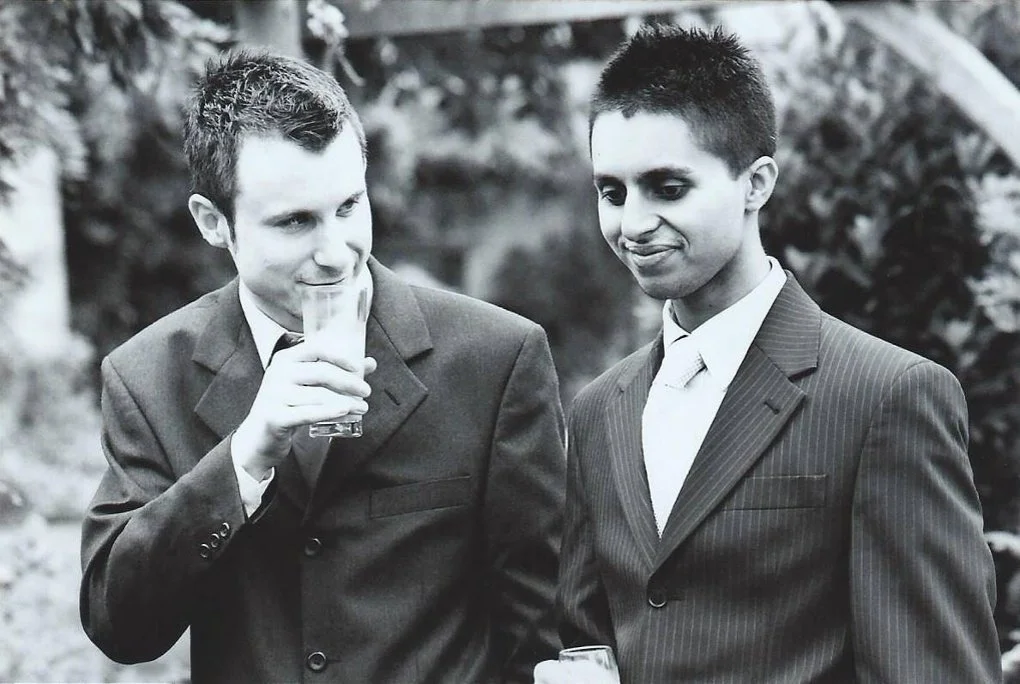
Matt Mahmood-Ogston and Dr Nazim Mahmood attending a friend’s wedding. England, UK. March 2005
I need to tell you something uncomfortable about the way most charities handle consent.
The form exists. The signature is on it. The legal team is satisfied.
And the person whose story you just published? They didn't really understand what they were agreeing to.
I know this because I've seen it happen. And I know it because I've had to build my own ethical framework from a place where no consent form could ever be enough - because the person at the centre of my most important story can't give consent at all.
This is about ethical storytelling for charities. Not the version where you tick a box and move on. The version where you slow down, think about the human being inside the story, and ask yourself whether what you're about to do protects their dignity or serves your communications plan.
If you work in the charity sector in the UK - as a fundraiser, a comms lead, a CEO - you already know storytelling matters. It's at the heart of social impact storytelling. But the ethics of how we tell those stories? Most organisations haven't thought about it nearly enough.
Why I had to build my own ethical framework
Eleven years ago, I started sharing the story behind my charity, the Naz and Matt Foundation. My fiancé, Naz, tragically died by suicide. I wanted other LGBTQ+ people, and their families, facing similar situations to know they weren't alone.
What I didn't understand then was how consent works when the person at the centre of the story can't give it anymore.
Naz can't tell me if he'd want his story shared at government departments. He can't say whether he'd be comfortable with Channel 4 making a documentary. He can't decide if the song the Young'uns wrote about us should be performed at folk festivals.
But what I do know is that we had many conversations together about building a legacy that would outlast our physical lives. A few months before he passed away, he asked me to promise him that I would never forget him.
I kept my word. And I made a promise that I would never allow the world to forget him, too.
I had to work out where the line was. Between authentic sharing that helped others and exploitation for engagement.
That tension never goes away. I still feel it before every talk.
And from that tension - from years of asking myself the same question before every article, every conference, every media interview - I developed what I now call the Naz Rule.
The Naz Rule: a simple ethical test for every story you tell
The Naz Rule is this:
Before you share anyone's story, ask: "If this person were standing behind me right now, reading every word - would they feel safe, respected, and accurately represented?"
That's the test. One question. And if the answer is anything other than a clear yes, you stop.
When the person can give consent, the Naz Rule works alongside a proper consent process. It's the gut check that catches what a form can't - the subtle ways a story might diminish someone even when they've technically agreed to it.
When the person can't give consent - because they've died, because they're a child, because they lack capacity - the Naz Rule becomes your entire ethical framework. It replaces the signature you can't get with a question you can always ask.
I ask myself this about Naz constantly. The answer shapes what I share and what I keep private. Some stories serve his memory and help others. Some stories would serve my platform but not his dignity. The Naz Rule is how I tell the difference.
It's simple. But simple isn't the same as easy.
Why the Naz Rule matters more than your consent form
A consent form protects the organisation from legal risk. The Naz Rule protects the person from harm.
Those are not the same thing.
I've seen charities with beautifully drafted consent forms who still publish stories that strip dignity from the people in them. The form was signed. The story was approved. And the person was reduced to their worst moment for the benefit of a fundraising campaign.
The form didn't catch it. The Naz Rule would have.
This is the distinction that matters in beneficiary storytelling ethics: legal permission is necessary, but it is not sufficient. You need both the form and the question. The signature and the gut check.
The two consent mistakes most charities make
Before I share the framework, let me name the two patterns I see most often. Nearly every charity I work with is making one of these mistakes.
Mistake 1: avoiding all vulnerable stories
Some organisations decide it's safer to tell no beneficiary stories at all. Just activities, numbers, organisational updates.
This feels responsible. But it has a cost.
Without stories showing actual change in real people's lives, funders struggle to trust your impact is real. Your supporters can't connect emotionally. Your team loses sight of why the work matters.
You're protecting people from a risk that might not exist. And you're limiting your ability to prove your mission works.
Mistake 2: rushing consent without proper process
Other organisations grab consent too quickly.
A beneficiary mentions they're grateful. Your comms team asks: "Can we share your story?"
They say yes because they feel they should. They don't understand what they're actually agreeing to.
Six months later, their photo appears on your website. Then in a funding proposal. Then in a LinkedIn post. Then in a printed leaflet. Then in local press.
They never agreed to all of that. They agreed to something vague in a moment when they felt obligated.
That's not informed consent. That's permission extraction.
And here's the difficult thing I need to say out loud: most consent processes in charities are designed to protect the organisation from legal risk, not to protect the dignity of the person whose story is being shared.
The Consent Protection Spectrum: where does your organisation sit?
I developed the Consent Protection Spectrum to help organisations honestly assess their current approach. It has five levels. Most charities I speak to operate at Level 2.
Level 1: No protection (harmful)
Consent grabbed in the moment of service. Stories used without clear permission. No way to withdraw. The person doesn't know where their story appears. Obligation implied through the power dynamic between organisation and beneficiary.
If this sounds extreme, it's more common than you'd think - especially in smaller organisations without dedicated comms teams.I want you to create a new area in the vault that includes all of the frameworks or methods or rules that I actually create. I want this to be like a database or a place that I can reference for future workshops, for training, for seminars. Examples would be the NAS rule or from the latest blog post we've been talking about.
Level 2: Legal protection only (insufficient)
A written consent form exists. But it's vague about use cases. There's no follow-up after initial consent. The person can't easily withdraw. The focus is on protecting the organisation, not the person.
This is where most charities sit. The form exists. The intent is good. But the process doesn't go far enough.
Level 3: Basic dignity protection (minimum standard)
A time gap between service and consent request. Specific use cases explained. Written consent with clear language. A withdrawal process that exists and is communicated. No obligation to participate.
This is the minimum standard every charity should meet. If you're below this, that's your first priority.
Level 4: Comprehensive protection (best practice)
Separate consent for each use case - website, social media, funding applications, press. Draft review before publication. Regular check-ins about continued comfort. Easy withdrawal. Explicit separation from service delivery. Support offered if sharing causes distress.
This is where you should be aiming. It takes more time. It's worth it.
Level 5: Empowerment model (gold standard)
The person has control over their narrative. Co-creation of how the story is told. The person sees the measurable impact of sharing - the policy change, the funding secured. Compensation offered where appropriate. The organisation accounts for power dynamics at every stage.
Level 5 isn't always possible. But it should be the aspiration, because it shifts the relationship from "we're using your story" to "we're telling this story together."
What proper consent actually requires for ethical charity storytelling
If you want to move up the spectrum, here's what a dignity-centred consent process looks like in practice.
Time and space
Don't ask for consent in the moment of transformation. Don't ask when someone is grateful, vulnerable, or dependent on your services.
Wait. Give them distance from the immediate experience. Then approach them separately, outside of service delivery, and explain what you're asking for.
You should make a note of that moment of transformation before it gets forgotten. But you shouldn't be asking for formal consent in that moment.
Full transparency about use
"Can we share your story?" is too vague.
Be specific. Where will this appear? Who will see it? Will their name be used - real name, first name only, or pseudonym? Will photos be included? How long will it remain public?
People can't give informed consent if they don't know what they're consenting to.
The right to withdraw
Consent isn't permanent. Someone might agree today but change their mind in six months. Their circumstances might change. Their safety might be affected.
They need to know they can withdraw consent at any time, and you'll remove their story from active use as quickly as possible. You can't unpublish printed materials or un-send emails, but you can remove content from your website and stop using it going forward. If that limitation exists - as it does with documentary film or broadcast television - they need to know upfront.
No obligation
The person needs to know that saying no won't affect their access to your services. This is especially critical if your organisation holds power over them - if you're their housing provider, their support service, their employer.
Make it explicitly clear: "Saying no to sharing your story won't change the support we provide."
Separate consent for different uses
Someone might be comfortable with their story in an internal report but not on social media. They might agree to funding applications but not press releases. They might be fine with a first name and no photo, but not a full name and face visible.
Consent should be granular. Let people choose where they're comfortable being visible.
When someone can't give consent: applying the Naz Rule
This is the hardest situation. And it's the one that made me develop the Naz Rule in the first place.
When the person at the centre of the story has died, lacks capacity, or is a child, consent becomes more complex. A form can't solve it.
For deceased individuals: consider whether sharing serves their memory or exploits it. Would they have wanted this visibility? Does the story honour their dignity? I ask myself these questions about Naz constantly. The answer shapes what I share and what I keep private.
For children and young people: get consent from both the young person (if they're old enough to understand) and their parent or guardian. Remember that what feels fine at age fourteen might feel mortifying at age eighteen. Consider pseudonyms. Avoid identifiable photos. Protect their future self from decisions made when they were younger.
For people lacking capacity: work with their advocate or family. Ask what protects their dignity. Default to caution. Their story can still be told in aggregate - "people we support experience..." - without individual identification.
In every one of these situations, the Naz Rule is your compass. If this person were standing behind me right now, reading every word - would they feel safe, respected, and accurately represented?
How beneficiary storytelling ethics strengthens your impact (not limits it)
I sometimes hear charity leaders say that ethical storytelling means telling fewer stories. Smaller stories. Safer stories.
That's not what it means at all.
Ethical storytelling means telling stories that are true, that are told with permission, and that treat the person at the centre as a whole human being with agency - not as a case study or a prop for your fundraising campaign.
Those stories are actually more powerful. A funder reading a story where the beneficiary clearly had agency, clearly consented, clearly was treated with respect - that funder trusts the organisation more. Not less.
And the data supports this. When you combine ethical storytelling with the kind of evidence-led approach I describe in my guide to turning charity data into stories funders actually feel, the result is a narrative that is both emotionally compelling and structurally trustworthy.
The organisations that consistently win funding, build donor trust, and maintain their reputation over the long term are not the ones telling the most dramatic stories. They're the ones telling the most honest ones.
Getting started: three things to do this week
First: pull out your current consent form. Read it through the lens of the Consent Protection Spectrum. What level are you at? Be honest.
Second: apply the Naz Rule to the last three stories your organisation published. If this person were standing behind me right now, reading every word - would they feel safe, respected, and accurately represented? If the answer to any of them is uncertain, you have work to do.
Third: have one conversation with your team about the difference between legal consent and dignity-centred consent. Just one conversation. That's where culture change starts.
Download a free consent form template
If you want a ready-made template for a dignity-centred consent form - one that covers use cases, identification, photos, withdrawal, and the no-obligation clause - I've included one in my newsletter.
➜ You can subscribe at impactstoryteller.org.
Frequently asked questions
What is the Naz Rule in ethical storytelling?
The Naz Rule is a simple ethical test developed by Matt Mahmood-Ogston from his experience sharing the story of his late fiancé Naz, who died by suicide. The rule states: before you share anyone's story, ask "If this person were standing behind me right now, reading every word - would they feel safe, respected, and accurately represented?" When the person can give consent, the Naz Rule works alongside a proper consent process as a gut check. When they can't give consent - because they've died, are a child, or lack capacity - it becomes the core ethical framework.
How do I get proper consent for charity beneficiary stories?
Proper consent requires five things: time and space (don't ask in the moment of vulnerability), full transparency about where and how the story will be used, the right to withdraw consent at any time, a clear statement that saying no won't affect services, and separate consent for different use cases (website, social media, press, funding applications). Most charities operate with vague, one-size-fits-all consent that protects the organisation legally but doesn't protect the person's dignity.
What should I do when a beneficiary can't give consent?
When someone has died, is a child, or lacks capacity, apply the Naz Rule as your primary ethical framework. For deceased individuals, consider whether sharing serves their memory and honours their dignity. For children, get consent from both the young person and their guardian, use pseudonyms, and protect their future self. For people lacking capacity, work with their advocate, default to caution, and consider telling their story in aggregate rather than individually.
Does ethical storytelling make fundraising harder?
No. Ethical storytelling makes fundraising more trustworthy. Funders who read stories where beneficiaries clearly had agency and gave informed consent trust the organisation more, not less. The most powerful fundraising stories are not the most dramatic - they're the most honest. Combining ethical storytelling with evidence-led narrative, as part of a broader social impact storytelling approach, produces stories that are both emotionally compelling and structurally credible.
What is the Consent Protection Spectrum?
The Consent Protection Spectrum is a five-level framework for assessing how well your organisation's consent process protects beneficiary dignity. Level 1 is harmful (no protection). Level 2 is legal protection only (insufficient). Level 3 is basic dignity protection (the minimum standard). Level 4 is comprehensive protection (best practice). Level 5 is the empowerment model (gold standard), where the beneficiary co-creates the narrative. Most charities operate at Level 2. The goal is Level 3 minimum, Level 4 as standard, Level 5 when possible.
Matt Mahmood-Ogston is a social impact storytelling strategist, documentary photographer, and charity CEO based in London. He founded the Naz and Matt Foundation after his fiancé Naz died by suicide, and has spent a combined twenty-five years telling stories, and helping charities, social impact teams, and purpose-driven organisations tell stories that secure funding and build trust - ethically.
For the complete guide to social impact storytelling, read the definitive UK guide to social impact storytelling.
Subscribe to The Social Impact Storyteller newsletter for weekly frameworks, templates, and practical tools: impactstoryteller.org