The Story Nobody Asked You to Tell
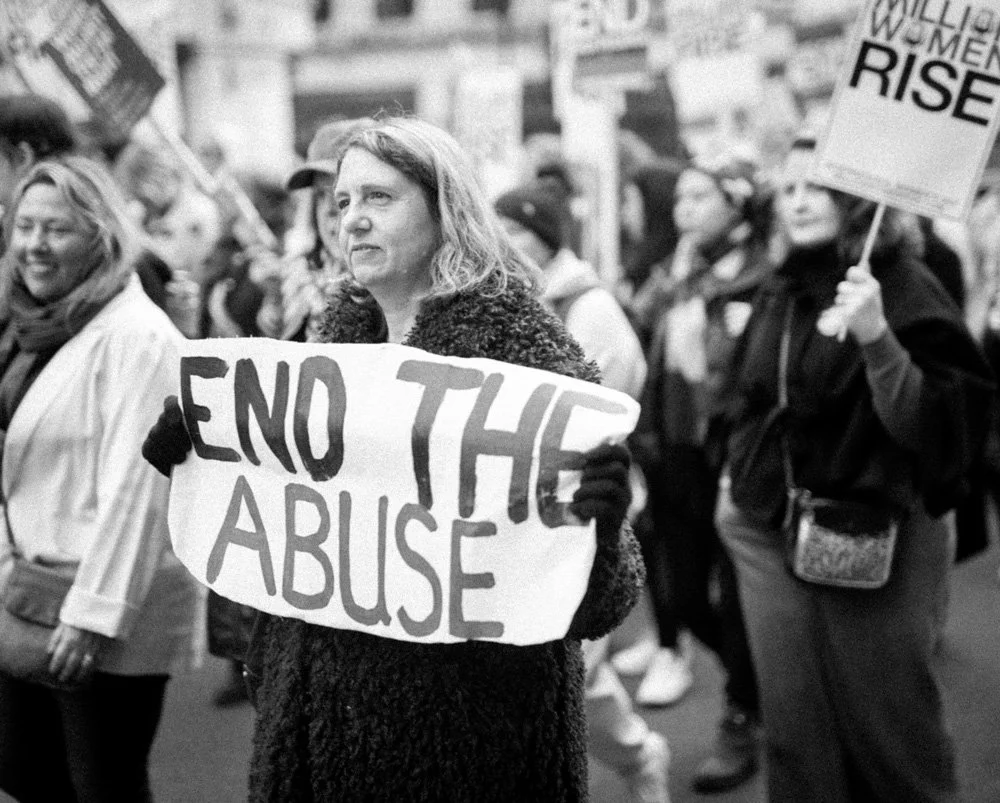
Most charity organisations are so focused on how to tell their impact stories that they never stop to ask whether they should. This edition of Social Impact Storyteller challenges that assumption - through three photographs taken at the Million Women Rise march in Central London.
Last Saturday, I stood on the pavement in Central London and watched the Million Women Rise march move through the streets.
I was there as a supporter, an ally, and a documentary photographer. I had my camera. I had access. I had a platform to share whatever I captured.
And yet some of the most important decisions I made that day were about what not to photograph.
The march was led by Black and Global Majority women calling for an end to violence and abuse against women and girls. That space belonged to them, not to me. My role was to witness, to document where it was appropriate to do so, and to amplify rather than interpret.
Every photograph I took involved a decision. Not just a technical one - exposure, framing, light - but an ethical one. Why am I raising my camera right now? What does this image do to the person in it? Is this mine to tell?
Three photographs. Three decisions.
I want to show you three of my images from that day. Not to illustrate a point, but because each one represents a deliberate choice - about who to photograph, what I was trying to honour in the frame, and what I chose not to extract.
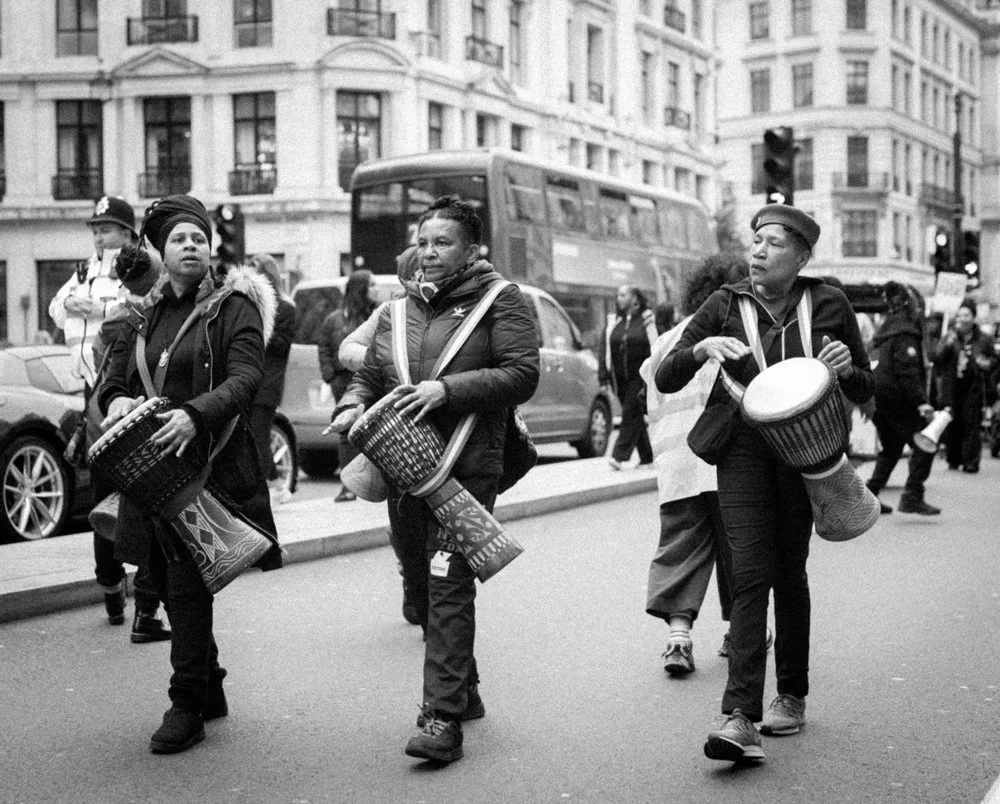
Three Black women playing djembe drums as they march through Central London. Regent Street, London. 7th March 2026.
This was the first image I made. I chose it because it shows leadership, not victimhood. These women are not being documented as people who need help. They are leading thousands of people through the streets of Central London, setting the rhythm of the whole march.
When your organisation photographs the people you serve, ask yourself: does this image show them as they are - or as you need them to appear in order to make your funding case?
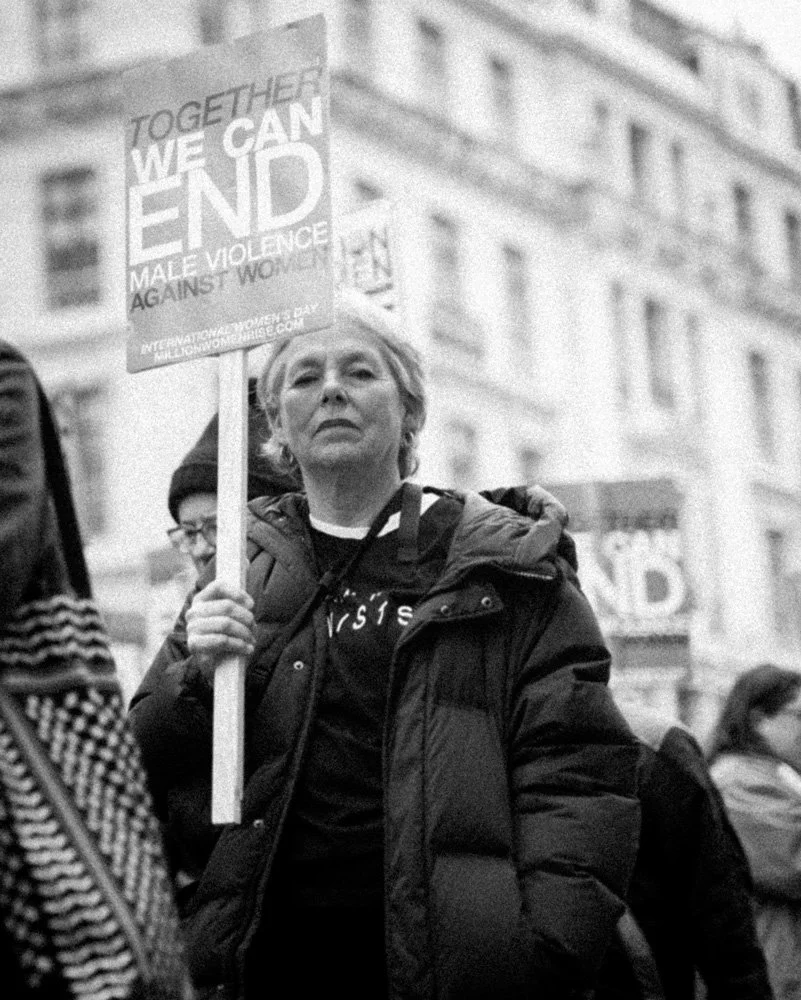
A woman holding a sign reading "Together We Can End Male Violence Against Women", looking directly into the lens. Regent Street, London. March 2026
She saw me raise the camera and held my gaze. That is a gift a photographer does not take lightly. She chose to be in this photograph. Her directness is the story - not her vulnerability, not a narrative I have constructed around her. Just her presence, her conviction, and her decision to look back.
How many of the stories your organisation tells were equally chosen by the person at their centre?
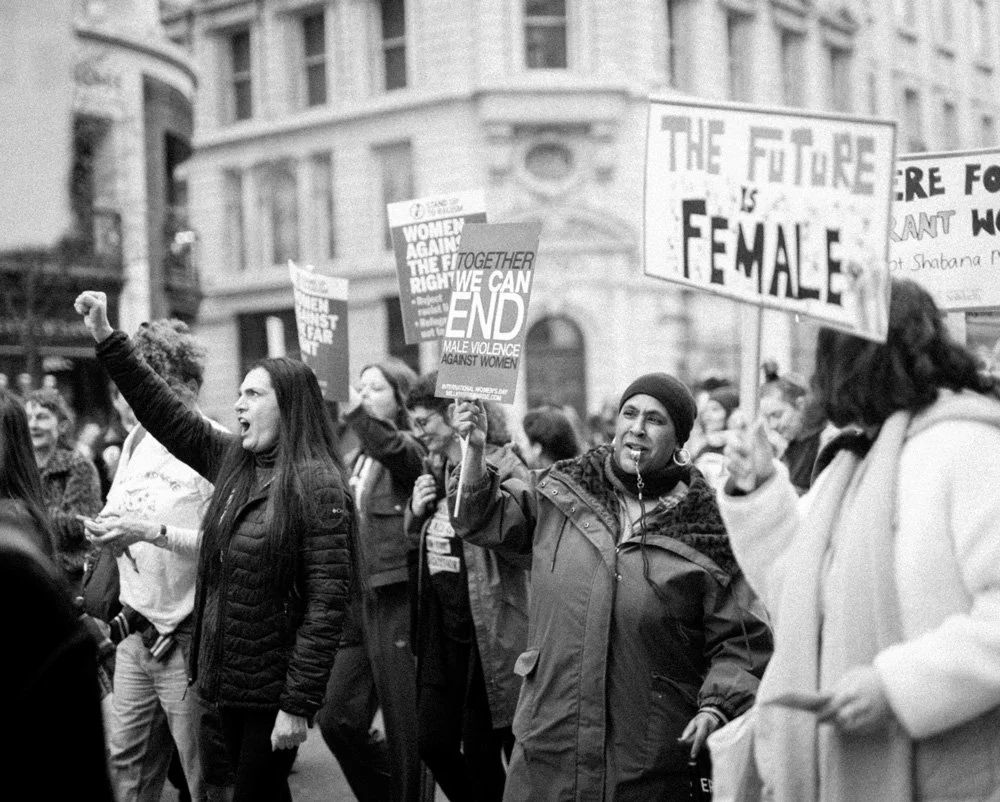
A crowd mid-march, a woman's fist raised, voices open, signs filling the frame. Regent Street, London. March 2026
I did not try to find a single face to carry the story of the whole march. That would have been a reduction. This image is deliberately collective - it refuses to flatten thousands of people into one spokesperson.
When you tell your organisation's impact story, are you looking for the single neat narrative - because it is easier to tell - when the truth is actually messier, wider, and more powerful than that?
The stories causing the most harm are not the ones told with bad intentions.
They are the ones told without asking first.
The infrastructure of impact communication creates relentless pressure to produce content. Grant reports need case studies. Websites need stories. Social media needs posts. Annual reviews need faces. And the path of least resistance is always the story that is already in front of you.
None of that is malicious. But convenience is not the same as consent. Availability is not the same as permission. And a story that exists because your communications calendar needed filling is a fundamentally different thing from a story that exists because a community wanted it told.
The Million Women Rise march was not a content opportunity. It was a political act, organised by women who had decided what they wanted to say and how they wanted to say it.
Your job as a communicator is to understand that difference and work within it.
Three questions to ask before you photograph anything
These apply whether you are using a professional camera or a smartphone. And they apply equally to written stories, case studies, and grant reports.
Why am I raising my camera right now? Is it because this moment deserves to be documented, or because you have your phone out and something is happening? There is a difference between photographing because a moment has meaning and photographing because you can.
Would the person in this frame recognise themselves in it? If the person in your photograph saw it shared online tomorrow, would they feel their story had been treated with care? Or would they feel reduced to a symbol, a statistic, a piece of evidence for someone else's argument?
Is this mine to tell? You are present. You have a camera. That does not automatically make this your story.
The question underneath all of it
Before you adapt a story for different audiences - which is what Edition 9 of this newsletter covered - you need to ask something more fundamental.
Who asked for this story to be told?
If you cannot answer that question clearly and honestly, you have not finished thinking yet.
—
This article is an extract from the Social Impact Storyteller - my weekly newsletter for charity leaders and social impact professionals. Every Thursday: one storytelling idea and three ways to implement it, including a framework, a template, and an AI prompt.
The full Edition 10 includes the complete "Before You Press Send" template, an expanded AI prompt for reviewing your existing impact communications through the lens of story ownership and dignity, and this week's reader poll.
Subscribe at impactstoryteller.org
Follow me on LinkedIn - Matt Mahmood-Ogston - Award-winning social impact storyteller, documentary photographer, and charity CEO/Founder, Naz and Matt Foundation