When naming them would cause them harm. Do this instead.
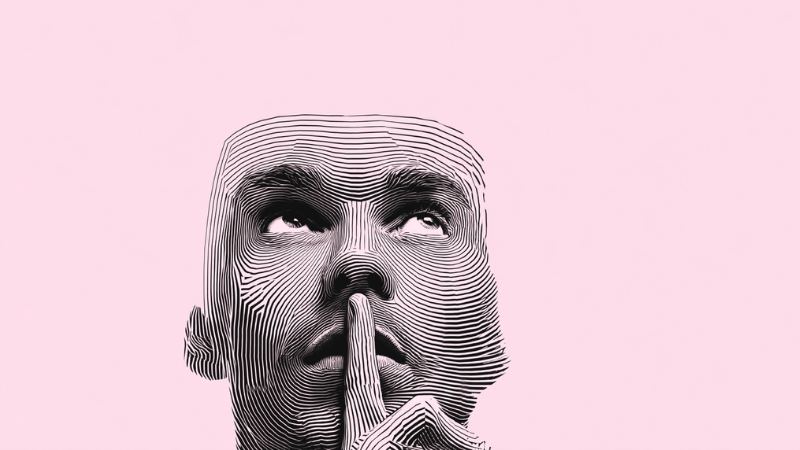
I have been speaking with a number of UK charity leaders recently, and the same knot keeps surfacing, particularly among those serving vulnerable adults and young people.
They have a story that could change policy, unlock funding, or shift public opinion. They have a person willing to tell it. But naming that person, showing their face, or placing them geographically could cause real harm. Sometimes the harm is physical. Sometimes it is re-traumatisation. Sometimes it is a family member finding them. Sometimes it is a young person being outed before they are ready. The shape of the harm varies. The bind is the same.
So the story sits untold. The impact goes unproven. The pattern continues.
This is the real cost of not solving this problem. Your most powerful stories often belong to people you cannot name, and that is precisely why they matter. Safety is not a reason to stay silent. It is a reason to tell the story differently.
What shape-telling looks like in practice
Let me tell you about a client we worked with at my charity, Naz and Matt Foundation. I will call him Ali. That is not his name.
Ali grew up in a country where being gay was illegal, and where community trials for homosexual activity too often ended in death. He had a happy childhood. A good life. He worked as a waiter in a small café that served tourists. The price of all of it was to keep his true identity a secret, and he paid that price for years.
Then he met someone. Another man. They fell in love. They were careful, because the stakes were lethal, but one day they were spotted kissing on the cheek in what they thought was a private moment.
As Ali approached his family home later that day, he could hear his father shouting inside the house, things breaking, his mother crying. Something was badly wrong. He did not go to the door. He called the house instead. His mother answered. She said only this:
"Don't come home. They will kill you."
Ali stood still, his heart hammering. And then his father came out of the house with a gun. Ali turned and ran. He remembers running as hard as he could until he reached a brick wall at the edge of an alley. He heard the bullet before he saw where it landed. It flew past his head and buried itself in the wall beside him.
He lived. He hid. His brother, who worked in the country's law enforcement agencies, hunted him for months. A family friend eventually helped him escape. He is alive today because of that.
I have not told you what country Ali is from. I have not told you the name of his partner, which city he lived in, what his family name is, or what year this happened. Those are the details that, if named, could still put him at risk today. And yet you understand the story. You feel it. You know what is at stake when a charity supports someone like him.
That is what shape-telling looks like.
Three things every charity leader needs to hold about protected stories
First: the heaviest cost is on them, not you.
When someone agrees to share a protected story, they are almost always doing it for one reason. They want to make a difference. They want someone else not to go through what they went through.
If you then publish the story and it fizzles, if no one sees it, if nothing changes, you have failed them. Not your charity. Them. This reframes the whole craft. Protecting them in the telling is not enough. You also owe them the work of making the telling count. Otherwise, the cost they paid to share was not worth what came back.
Second: patterns are safer than persons.
One of the most underused techniques in ethical charity storytelling is the composite story. A narrative truthfully built from the shared experience of several clients, disclosed honestly in the telling. Composites protect identity without sacrificing truth. They often carry more weight than individual cases, because they demonstrate a pattern rather than one person's experience. Trust does not collapse when you say "this is a composite." Trust grows.
Third: consent is a live document, not a signature.
What happens when someone wants to withdraw their consent after publication?
If the story is a radio interview, a television broadcast, or a documentary that has already aired, consent cannot meaningfully be withdrawn. The content is already out in the world. If the story is on your website, your social media, or inside your impact report, it can and must be retractable.
Most charities have not pre-decided how they handle that call when it comes. Who speaks to the person? Do you take the impact report down, or republish without the story? How fast does the team move?
And the person whose story it is must know all of this in advance, in plain language. Informed consent has to include informed irretrievability. If a broadcast cannot be unaired, they need to know that before they say yes, not after.
A live example
For the first time since we launched Out and Proud Parents Day in 2019, Naz and Matt Foundation is this year actively asking even the parents of LGBTQ+ young people not to reveal their identity publicly unless it is absolutely safe for them to do so. The climate in 2026 is more hostile than it has been in years. The risk to the parent, and to their child being identified through them, is higher than we have ever seen.
This is not theory. It is how we are deciding, this summer, what we will and will not publish.
Want the practical tools for protecting stories that matter?
This article is an extract from The Social Impact Storyteller, my weekly newsletter for charity leaders and social impact professionals.
Every Thursday, I send one storytelling idea and three ways to implement it:
One framework
One template
One AI prompt
This week's full edition includes:
The Protected Story Protocol (five gates every protected story must pass before publication)
The Pre-Publication Checklist (nine questions to run every protected story through)
An AI prompt for Claude and Gemini that audits a protected story for identification risk and consent integrity
Subscribe here to get the full toolkit: impactstoryteller.org
Matt Mahmood-Ogston Award-winning impact storyteller, documentary photographer and charity CEO Founder, Naz and Matt Foundation